Showing posts with label Review. Show all posts

Saturday, 9 August 2025

Apple iPhone Complete Guide: Features, Tips, and Latest Models 2024

Apple iPhone Complete Guide: Features, Tips, and Latest Models 2024

Apple iPhone Complete Guide 2024

Everything You Need to Know About iPhone: Models, Features, Tips & More

Expert Review & Buying Guide

Introduction to Apple iPhone

Apple iPhone has revolutionized the smartphone industry since its debut in 2007. With each new generation, Apple continues to push the boundaries of mobile technology, offering users an unprecedented combination of performance, design, and user experience.

In 2024, the iPhone lineup represents the pinnacle of smartphone innovation, featuring advanced processors, cutting-edge cameras, and intelligent software that adapts to your daily needs.

Why Choose iPhone?

  • Seamless ecosystem integration
  • Industry-leading security and privacy
  • Regular software updates
  • Premium build quality
iPhone Overview

Apple iPhone Family - Complete Ecosystem

iPhone 16 Series: Latest Models 2024

iPhone 16 Series

iPhone 16 Series with Apple Intelligence

iPhone 16

iPhone 16

Starting at $799

  • A18 Chip
  • 48MP Main Camera
  • 6.1" Display
  • All-day Battery

iPhone 16 Plus

Starting at $899

  • A18 Chip
  • 48MP Main Camera
  • 6.7" Display
  • Longest Battery Life
iPhone 16 Pro

iPhone 16 Pro

Starting at $999

  • A18 Pro Chip
  • 48MP Triple Camera
  • 6.3" ProMotion
  • 4K ProRes Video
iPhone 16 Pro Max

iPhone 16 Pro Max

Starting at $1,199

  • A18 Pro Chip
  • 48MP Triple Camera
  • 6.9" ProMotion
  • Advanced Video Features

What's New in iPhone 16 Series

  • • Apple Intelligence integration for enhanced AI capabilities
  • • Action Button replaces the traditional mute switch
  • • Camera Control button for professional photography
  • • Improved battery life across all models
  • • Enhanced durability with Ceramic Shield

Technical Specifications Comparison

iPhone 16 Series Specs Comparison

iPhone 16 Series Specifications Overview

Feature iPhone 16 iPhone 16 Plus iPhone 16 Pro iPhone 16 Pro Max
Display Size 6.1" 6.7" 6.3" 6.9"
Processor A18 A18 A18 Pro A18 Pro
Main Camera 48MP 48MP 48MP Triple 48MP Triple
Storage Options 128GB-1TB 128GB-1TB 128GB-1TB 256GB-1TB
Battery Life Up to 22hrs Up to 27hrs Up to 27hrs Up to 33hrs
Starting Price $799 $899 $999 $1,199

Key iPhone Features & Capabilities

Advanced Camera System

  • 48MP Main Camera
  • 2x Telephoto (Sensor Crop)
  • Ultra Wide Camera
  • Night Mode
  • 4K Video Recording

A18 Performance

  • 3nm Process Technology
  • 16-core Neural Engine
  • Hardware-accelerated Ray Tracing
  • 20% Faster CPU
  • Enhanced Gaming Performance

Super Retina XDR

  • OLED Technology
  • 2000 nits Peak Brightness
  • ProMotion (Pro Models)
  • Always-On Display
  • True Tone

Security & Privacy

  • Face ID
  • Secure Enclave
  • App Tracking Transparency
  • On-device Processing
  • Privacy Report

All-Day Battery

  • Up to 33hrs Video Playback
  • MagSafe Wireless Charging
  • Qi Wireless Charging
  • Fast Charging with USB-C
  • Optimized Battery Charging

5G Connectivity

  • 5G with mmWave
  • Wi-Fi 7 (Latest Models)
  • Bluetooth 5.3
  • Emergency SOS via Satellite
  • Dual eSIM Support

Essential iPhone Usage Tips & Tricks

iPhone Tips App

Apple's built-in Tips app provides extensive guides

iPhone User Guides

Comprehensive user guides and tutorials available

Photography Mastery

  • Portrait Mode: Use for professional-looking photos with depth effect
  • Night Mode: Automatically activates in low light conditions
  • ProRAW: Capture in RAW format for professional editing
  • Grid Lines: Enable in Settings > Camera for better composition
  • Timer Function: Perfect for group photos and selfies
  • Volume Button: Use as shutter button for easier photos

Battery Life Optimization

  • Low Power Mode: Extends battery life when needed
  • Background App Refresh: Disable for unused apps
  • Screen Brightness: Use Auto-Brightness for optimal power usage
  • Location Services: Turn off for apps that don't need it
  • Push Email: Change to Fetch to save battery
  • Optimized Charging: Let iPhone learn your routine

Privacy & Security Tips

  • App Permissions: Regularly review in Settings > Privacy
  • Two-Factor Authentication: Enable for Apple ID
  • Screen Time: Monitor and control app usage
  • Safari Privacy: Use Private Browsing mode
  • Find My: Enable for device tracking and security
  • App Tracking: Control which apps can track you

Productivity Features

  • Shortcuts App: Automate repetitive tasks
  • Control Center: Customize for quick access
  • Siri Suggestions: Let Siri help with daily routines
  • Focus Modes: Customize notifications for different activities
  • Handoff: Continue tasks across Apple devices
  • AirDrop: Quickly share files with nearby devices

Pro Tips for Advanced Users

Text Shortcuts

Create custom text replacements

Gestures

Master swipe gestures for navigation

Voice Control

Control your iPhone with voice commands

Complete iPhone Buying Guide 2024

Which iPhone Should You Buy?

Budget Conscious ($399-$599)

Recommended: iPhone SE 3rd Gen or iPhone 13 mini

  • • Great performance for basic needs
  • • Excellent camera quality
  • • Long-term software support

Mainstream Users ($699-$899)

Recommended: iPhone 15 or iPhone 16

  • • Perfect balance of features and price
  • • Excellent camera system
  • • Latest processor and features

Power Users ($999+)

Recommended: iPhone 16 Pro or Pro Max

  • • Professional-grade camera system
  • • ProMotion display technology
  • • Maximum performance and storage

Key Considerations

Screen Size Preference

Choose between compact (6.1") and large (6.7"+) displays based on your usage patterns.

Photography Needs

Pro models offer advanced camera features for photography enthusiasts.

Storage Requirements

Consider your usage: 128GB for basic, 256GB for moderate, 512GB+ for heavy users.

Performance Needs

A18 Pro offers better gaming and professional app performance.

Battery Life

Larger models typically offer longer battery life for heavy usage.

Where to Buy Your iPhone

Apple Store

  • • Best customer service
  • • Trade-in programs
  • • Apple Care+

Carriers

  • • Monthly installments
  • • Trade-in deals
  • • Service bundles

Retailers

  • • Competitive pricing
  • • Special promotions
  • • Instant availability

Online

  • • Best deals
  • • Price comparisons
  • • Home delivery

Frequently Asked Questions

How long does an iPhone typically last?

iPhones typically last 4-6 years with regular software updates. Apple supports devices with iOS updates for approximately 5-7 years from the original release date.

Is it worth upgrading every year?

For most users, upgrading every 2-3 years provides the best balance of new features and value. Annual upgrades are typically only worthwhile for power users who need the latest technology.

Should I buy AppleCare+?

AppleCare+ is recommended if you're accident-prone, travel frequently, or want peace of mind. It provides extended warranty coverage and significantly reduces repair costs.

What storage size should I choose?

128GB is sufficient for basic use, 256GB for moderate photo/video usage, 512GB for heavy media consumption, and 1TB for professional use or extensive local storage needs.

Are refurbished iPhones worth buying?

Apple-certified refurbished iPhones offer excellent value with full warranty coverage. They undergo rigorous testing and come with new batteries and outer shell.

Ready to Choose Your Perfect iPhone?

The iPhone remains the gold standard in smartphone technology, offering unmatched integration, security, and user experience. Whether you choose the budget-friendly iPhone SE, the versatile iPhone 16, or the pro-level iPhone 16 Pro Max, you're investing in a device that will serve you reliably for years to come.

Remember to consider your specific needs, budget, and how you plan to use your device. With Apple's extensive ecosystem and regular software updates, any iPhone you choose today will remain current and secure for many years ahead.

iPhone Family

The complete iPhone family - there's a perfect model for everyone

iPhone Guide 2024

Your comprehensive resource for everything iPhone. Stay updated with the latest features, tips, and buying recommendations.

Resources

Stay Connected

Follow for the latest iPhone updates and tips

© 2024 iPhone Complete Guide. This guide is created for educational purposes. iPhone and Apple are trademarks of Apple Inc.

Sunday, 25 May 2025

How to Recover a Failed or Lost Money Transfer to India"

How to Recover a Failed or Lost Money Transfer to India: Complete Recovery Guide

How to Recover a Failed or Lost Money Transfer to India: Complete Recovery Guide

A comprehensive guide to recovering your money when international transfers to India go wrong

Updated: May 25, 2025 12 min read 24 Comments
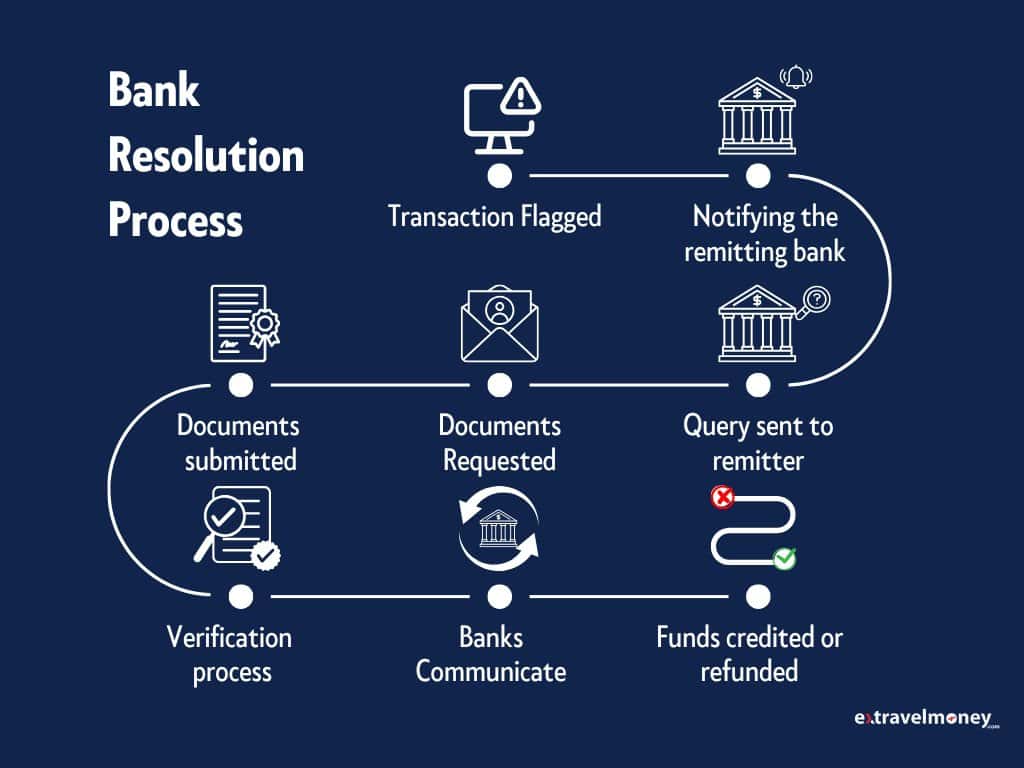
Money Transfer Recovery Process

The typical bank resolution process for international money transfer issues

Written by Financial Recovery Expert

International Remittance Specialist with over 10 years of experience helping clients recover failed transfers

Have you sent money to India only to discover your transfer has failed or gone missing? You're not alone. Every day, thousands of people face this stressful situation, wondering if they'll ever see their hard-earned money again.

The good news? Most failed transfers can be recovered if you know the right steps to take and act quickly. This comprehensive guide will walk you through exactly what to do when your money transfer to India goes wrong.

Understanding Why Money Transfers to India Fail

Before we dive into recovery steps, it's important to understand what causes international money transfers to India to fail in the first place. According to research, the most common reasons include:

Common Reasons for Failed International Transfers to India

  • Incorrect Beneficiary Details - Misspelled names, wrong account numbers, or incorrect IFSC codes
  • Insufficient Documentation - Missing KYC requirements or purpose codes required by Indian regulations
  • Compliance Issues - Transfers flagged by anti-money laundering or fraud prevention systems
  • Technical Issues - System failures at sending or receiving banks, SWIFT network problems
  • Intermediary Bank Delays - Funds held up at correspondent banks for additional verification
  • Currency Conversion Problems - Issues with exchange rate or forex regulations
  • Account Limitations - Recipient's account restrictions (dormant status, transaction limits)
  • Regulatory Changes - Unexpected RBI policy changes affecting international remittances
Fund Transfer Process Flowchart

Standard flowchart of the fund transfer process showing potential failure points

Step-by-Step Recovery Process for Failed Money Transfers to India

When your money transfer to India fails, time is of the essence. Follow these steps immediately to maximize your chances of recovering your funds:

Step 1: Verify the Transfer Details

Double-check all the information you provided for the transfer. A simple typo in the account number or beneficiary name could be the culprit.

  • Confirm the recipient's full name (exactly as it appears on their bank account)
  • Verify the account number and IFSC code
  • Check if you've provided all required information for international transfers to India

Step 2: Contact Your Sending Institution Immediately

Don't wait. Contact the bank or money transfer service you used to initiate the transfer as soon as possible.

  • Provide your transaction reference number
  • Explain that your transfer to India has failed or is missing
  • Ask them to initiate a trace or investigation
  • Request written confirmation of your complaint (this is crucial for escalation)

Pro tip: Most banks have a dedicated international remittance department - ask to speak directly with them.

Step 3: Request a SWIFT/GPI Trace

For wire transfers, ask your bank to initiate a SWIFT GPI trace to track exactly where your money is in the transfer process.

SWIFT GPI allows real-time tracking of international payments, showing which banks have received the funds and where they might be stuck.

Step 4: Contact the Receiving Bank in India

If your sending institution confirms the money left their system, contact the receiving bank in India directly.

  • Provide all transfer details and the SWIFT message reference
  • Ask them to check if the funds arrived but weren't credited to the account
  • Request information about any compliance holds or verification requirements

Step 5: Submit a Formal Complaint

If customer service doesn't resolve your issue within 3-5 business days, escalate by filing a formal complaint.

  • Submit a written complaint to your bank's complaint department
  • Include all transaction details and communication records
  • Set a clear timeframe for expected resolution (typically 30 days)

Step 6: Escalate to Regulatory Authorities

If your sending bank fails to resolve the issue, it's time to involve regulators.

For transfers sent from outside India:

  • File a complaint with your country's banking ombudsman or financial regulator
  • In the US, contact the Consumer Financial Protection Bureau (CFPB)
  • In the UK, contact the Financial Ombudsman Service

For the Indian side of the transaction:

  • Contact the RBI Banking Ombudsman
  • File a complaint through the RBI Complaint Management System (CMS) at https://cms.rbi.org.in
  • Call the RBI toll-free number: 14448

Recovery Success Rates

According to banking industry data, over 85% of failed international transfers are eventually recovered when proper procedures are followed. The key is to act quickly and document all communications.

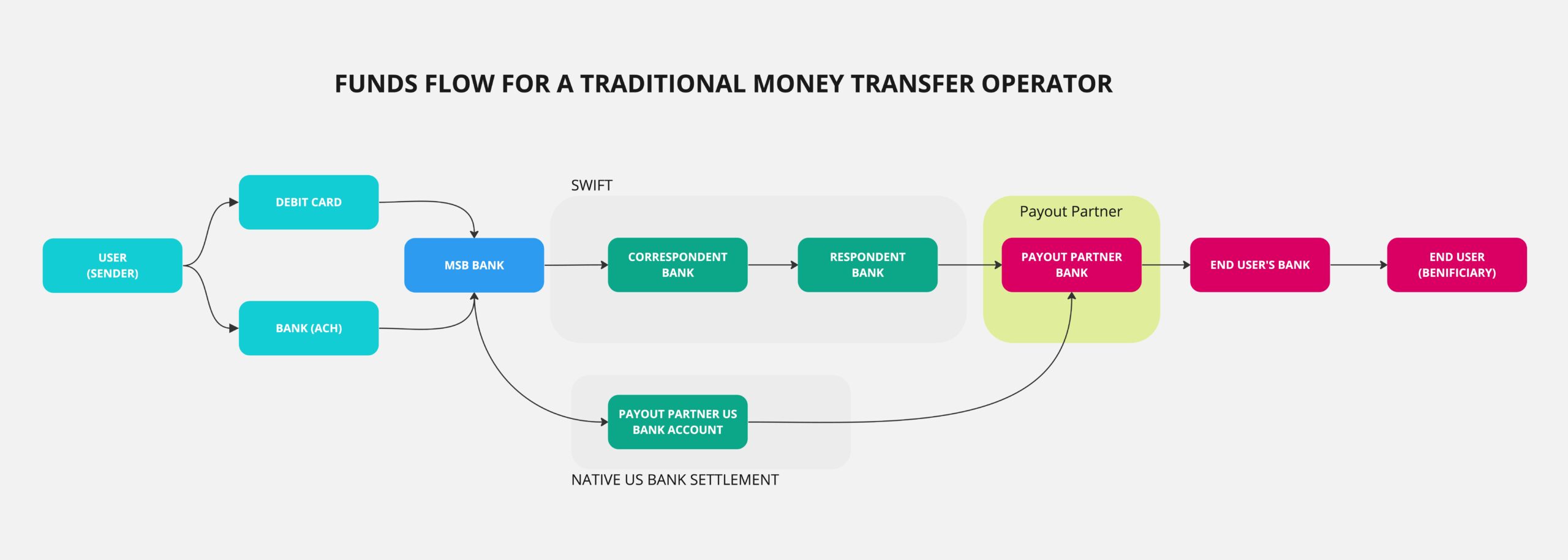
Money Transfer Fund Flow Diagram

Standard fund flow for a generic money transfer operation showing where failures can occur

RBI Guidelines for International Money Transfers to India

Understanding the Reserve Bank of India's regulations can help you both recover failed transfers and prevent future issues:

Key RBI Regulations for International Remittances

  • Foreign Exchange Management Act (FEMA) - Governs all foreign currency transactions into India
  • Purpose Codes - Transfers to India must include a purpose code indicating why money is being sent
  • KYC Requirements - Both sender and recipient must meet Know Your Customer guidelines
  • Rupee Drawing Arrangements (RDA) - Special framework for non-bank entities to facilitate remittances to India
  • Maximum Transfer Limits - Regulatory caps on transfer amounts (varies by purpose)

Important Note:

According to RBI guidelines, if your transfer fails due to incorrect beneficiary details, the money should be returned to your account within 30 days maximum. If this doesn't happen automatically, you must contact your bank.

How to Prevent Failed Money Transfers to India

Prevention is always better than recovery. Follow these best practices to ensure your future transfers to India go smoothly:

Before Initiating Transfer

  • Triple-check all recipient details (name, account number, IFSC code)
  • Verify the recipient's account is active and can receive international transfers
  • Understand all fees involved (including intermediary bank fees)
  • Choose reputable transfer services with good India corridors
  • Ensure you have all documentation ready (purpose of transfer, etc.)

During and After Transfer

  • Save all receipts and confirmation numbers
  • Track your transfer status using provided tools
  • Inform the recipient about the expected arrival date
  • Confirm receipt with the beneficiary
  • Report any delays immediately (don't wait)
International Payment Problems and Solutions

Common international payment problems that require effective solutions

Comparing Money Transfer Services to India by Reliability

Not all money transfer services are created equal when it comes to handling India-bound transfers. Here's how the major providers compare:

Transfer Service Recovery Support Transfer Success Rate Customer Service for Issues
Wise (TransferWise) Strong tracking tools, dedicated support team 98% ★★★★☆
Remitly 24/7 support, transfer guarantee 97% ★★★★☆
ICICI Money2India Specialized India corridor, branch support 96% ★★★☆☆
Xoom (PayPal) Money-back guarantee, fast support 95% ★★★☆☆
Western Union Extensive recovery network, in-person help 94% ★★★☆☆
Traditional Banks Formal investigation process, may be slower 90% ★★☆☆☆

Real Customer Experience: Recovering a Failed Transfer

"I sent $5,000 to my parents in Mumbai through my bank, but it never arrived. After 5 days of worry, I followed the exact steps outlined above—contacting my bank, requesting a SWIFT trace, and documenting everything. The issue turned out to be an intermediary bank holding the funds due to a name mismatch (my father's middle initial was missing). Once identified, the problem was resolved in 48 hours and the money arrived safely. The key was persistence and proper documentation."

— Raj P., Chicago

Frequently Asked Questions About Failed Money Transfers to India

How long does it typically take to recover a failed money transfer to India?

Recovery time varies based on the reason for failure. Simple issues like incorrect recipient details can be resolved in 3-7 business days. Complex regulatory or compliance issues may take 30-45 days. Bank-to-bank transfers generally take longer to resolve than specialized money transfer services.

Can I get my money back if I sent it to the wrong account in India?

Yes, but it's more challenging. Contact your sending institution immediately. According to RBI guidelines, while the bank cannot automatically reverse the transaction, you can file a formal complaint. If the recipient doesn't voluntarily return the funds, you may need to pursue legal options, which involve filing a police complaint and potentially court proceedings.

What happens if my money transfer fails due to regulatory or compliance issues?

If your transfer was flagged for regulatory or compliance reasons, the funds are typically held pending additional documentation or verification. You'll need to provide whatever information is requested, which might include proof of source of funds, purpose of transfer, or additional identity verification. Once satisfied, the transfer can proceed or funds will be returned to you.

Are there any fees involved in recovering a failed money transfer?

Most banks and transfer services don't charge additional fees for investigating failed transfers, especially if the failure wasn't your fault. However, wire recall fees may apply if you request to cancel a transfer that hasn't yet failed. Some banks charge trace fees for transfers over 30 days old. Always ask about potential recovery costs upfront.

How can I contact the RBI if my bank isn't helping resolve my failed transfer?

You can contact the RBI Banking Ombudsman by filing a complaint at https://cms.rbi.org.in, emailing crpc@rbi.org.in, or calling their toll-free number 14448. Make sure you've already gone through your bank's complaint process first, as the RBI typically requires this before intervening.

Conclusion: Staying Calm and Taking Action

Discovering that your money transfer to India has failed can be incredibly stressful, especially when those funds are meant for family needs, business operations, or important investments. Remember that the vast majority of failed transfers are eventually recovered when proper procedures are followed.

The key is to act swiftly, document everything, and escalate appropriately if initial attempts don't resolve the issue. By understanding the common failure points in international transfers to India and following the step-by-step recovery process outlined in this guide, you'll maximize your chances of a successful resolution.

And perhaps most importantly, use what you've learned to implement prevention strategies for your future transfers. Double-check recipient details, use reliable transfer services with strong India corridors, and keep proper records of all international money movements.

Key Takeaways:

  • Act immediately when a transfer fails - time is crucial
  • Contact your sending institution first, then escalate systematically
  • Request SWIFT traces for wire transfers
  • Document all communications and reference numbers
  • Understand RBI regulations to streamline the recovery process
  • Use reputable transfer services with strong track records for India remittances
  • Always triple-check recipient details before sending

Share Your Experience

Have you successfully recovered a failed money transfer to India? Or are you currently dealing with a transfer issue? Share your experience in the comments below to help others in the community.

Related Articles

Top 5 Safest Ways to Send Money to India in 2025

Compare the most secure and reliable methods for international remittance to India

Read More →

Understanding RBI's New Remittance Regulations for NRIs

Important changes affecting how Non-Resident Indians can transfer money home

Read More →

How to Save Money on Currency Exchange When Sending to India

Expert tips to get the best rates and minimize fees on USD to INR transfers

Read More →

Global Money Transfer Guide

Helping you navigate international money transfers with expert advice, comparisons, and problem-solving guides.

Subscribe to Our Newsletter

Get the latest updates on international transfer regulations and tips

© 2025 Global Money Transfer Guide. All rights reserved.

Disclaimer: This content is provided for informational purposes only and should not be considered legal, tax, or financial advice.

Saturday, 24 May 2025

How to Avoid Currency Conversion Losses When Transferring Money to India

How to Avoid Currency Conversion Losses When Transferring Money to India: The Ultimate Guide

How to Avoid Currency Conversion Losses When Transferring Money to India: The Ultimate Guide

A comprehensive strategy to maximize your remittance value and minimize hidden costs

Updated: May 24, 2025 15 min read

1. Introduction: The Hidden Cost of International Money Transfers

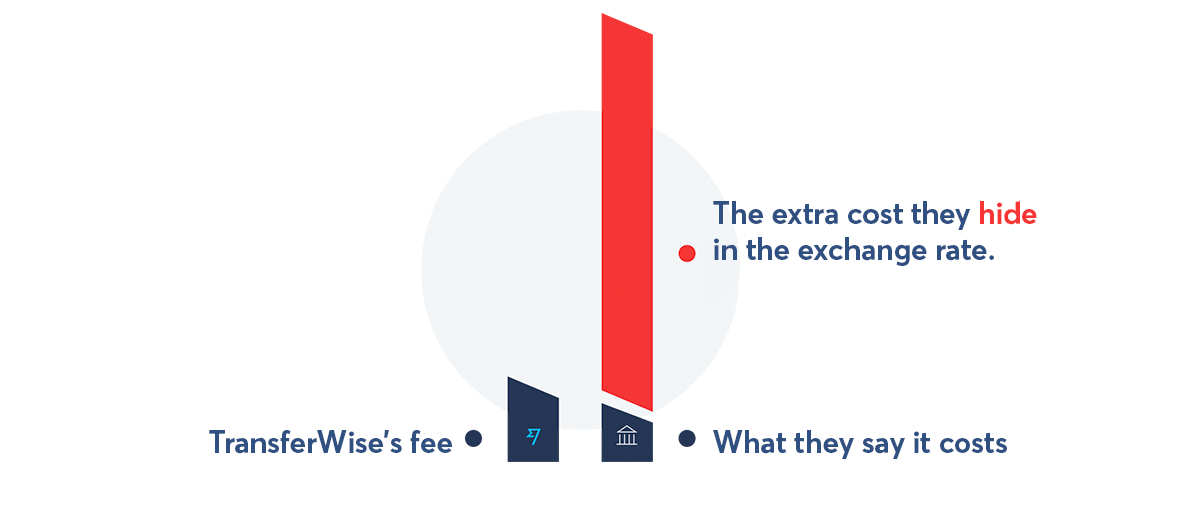
Chart showing billions lost to hidden cross-border fees

When sending money to India, most people focus only on the advertised transfer fee—but this is just the tip of the iceberg. The real cost often lies hidden in unfavorable exchange rates and undisclosed markups that can significantly reduce the amount your recipients actually receive.

According to a recent study, Indians paid over ₹263 billion (approximately $3.5 billion) on foreign exchange fees in 2020 alone, with roughly ₹97 billion hidden as exchange rate markups on currency conversions. This means that for every ₹100 sent to India, a significant portion never reaches the intended recipient due to these hidden costs.

The Real Impact:

If you're regularly sending money to India—whether to support family, invest in property, or for business purposes—these hidden costs can add up to thousands of dollars annually.

This comprehensive guide will equip you with strategies to identify these hidden costs, compare money transfer services effectively, time your transfers strategically, understand tax implications, and leverage digital tools to maximize every rupee that reaches your Indian bank account.

2. Understanding Currency Conversion Losses

Before diving into strategies, it's crucial to understand exactly how and where you lose money during currency conversion. International money transfers incur losses through multiple channels:

2.1. Exchange Rate Margins

Exchange rate margin illustration showing the difference between mid-market rate and provider rate

Exchange rate margins represent the biggest source of hidden costs. When a provider offers an exchange rate, they typically use a rate that's less favorable than the mid-market rate (the real exchange rate you see on Google or financial news sites). The difference between these two rates is their profit margin.

Example:

If the actual mid-market rate is 1 USD = 85.5 INR, a transfer provider might offer you 1 USD = 83.5 INR. On a $1,000 transfer, this 2% margin means the recipient receives ₹2,000 less than they would at the true rate.

2.2. Fixed Transfer Fees

These are the most visible fees, typically ranging from $0-50 depending on the service. While some services advertise "zero fees," they often compensate by offering poorer exchange rates.

2.3. Receiving Bank Charges

Indian banks may charge a fee for receiving international transfers, typically ranging from ₹100-1,500 depending on the bank and transfer method. These fees are often overlooked in calculations.

2.4. Intermediary Bank Fees

For transfers using the SWIFT network, multiple intermediary banks may process the transaction, each potentially deducting their own fee from the transfer amount. These fees are unpredictable and can range from $10-30 per intermediary.

Pro Tip:

When comparing services, calculate the total amount that will be received in India after ALL fees and exchange rate differences—not just the advertised transfer fee.

3. Comparing Money Transfer Services

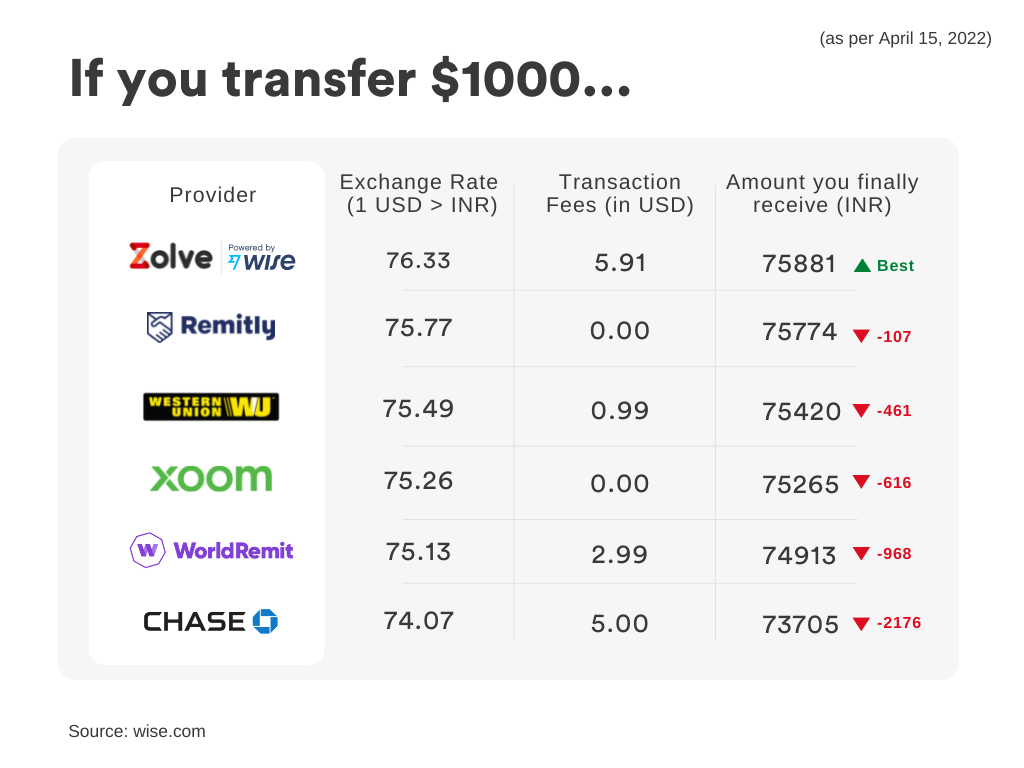
Comparison of money transfer services to India

Not all money transfer services are created equal. Here's a comparative analysis of the most popular options for sending money to India:

Service Typical Exchange Rate Margin Transfer Fees Speed Best For
Wise (formerly TransferWise) 0.4-0.5% $1-4 1-2 business days Transparency, competitive rates
Remitly 0.8-2% $0-3.99 Minutes (express) to 3-5 days (economy) Speed, first-time user promotions
Xoom (PayPal) 1-3% $0-4.99 Minutes to 1-2 business days Convenience for PayPal users
Western Union 2-4% $0-5 Minutes to 1-2 business days Cash pickup options
Bank Transfers 3-5% $20-50 3-7 business days Familiarity, established relationships
InstaRem 0.6-1% $0-4 1-2 business days Regular transfers, loyalty program

3.1. How to Compare Effectively

To truly compare services, follow this process for each transfer:

  1. Check the mid-market rate on Google or XE.com first
  2. Input the same send amount on multiple services
  3. Note the final INR amount the recipient will get (after all fees)
  4. Compare this final amount, not just the transfer fee
  5. Consider speed requirements and convenience factors

Pro Tip:

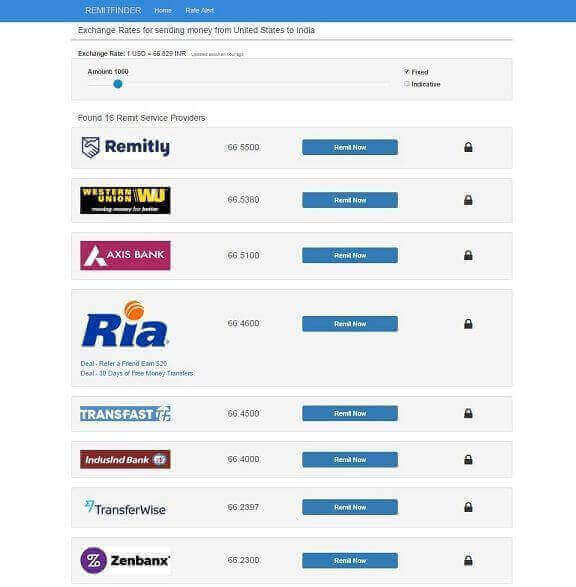
Use comparison tools like Monito, RemitFinder, or CompareRemit to get real-time comparisons across multiple providers in one place.

3.2. Service Selection Strategy

Different services excel in different scenarios:

For Regular Small Transfers (Under $1,000)

Services like Wise, Remitly, and InstaRem typically offer the best value due to their low fixed fees and competitive exchange rates.

For Larger Transfers (Over $5,000)

Consider specialist services like OFX or even negotiating rates directly with your bank for premium exchange rates. Some services also offer better rates for larger transfers.

For Emergency/Urgent Transfers

Remitly's Express service, Western Union, or Xoom offer near-instant transfers to India, though typically at a higher cost.

For Absolute Best Rates

Wise consistently offers rates closest to the mid-market rate. Skydo is another emerging option with competitive rates for India transfers specifically.

4. Strategic Timing of Your Transfers

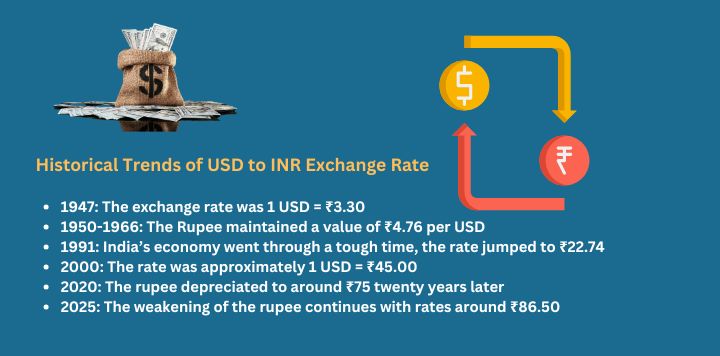
Currency fluctuations and timing transfers to India

Timing your transfers strategically can save you significant money, especially for larger amounts. Currency values fluctuate constantly due to economic data releases, geopolitical events, and market sentiment.

4.1. Best Days and Times

  • Mid-week transfers (Tuesday to Thursday) often offer better rates than weekends.
  • Morning hours in the US (when Indian markets are closed) can sometimes offer better rates.
  • Avoid transfers during major Indian holidays when banking systems may be slower.
  • The first half of the month typically sees more stable exchange rates than month-end.

"Mondays often experience the lowest number of trading in foreign exchange market. Therefore, you may expect the least fluctuation in price." - WorldRemit Research

4.2. Monitoring Exchange Rate Trends

For larger transfers, it's worth monitoring exchange rate trends over a period of time:

Historical trends of USD to INR exchange rates
  • Follow economic indicators like US Federal Reserve announcements, which often impact USD/INR rates.
  • Major Indian economic data releases (inflation figures, GDP growth) can cause short-term fluctuations.
  • Political stability or instability in either country can impact exchange rates significantly.
  • For transfers over $10,000, consider tracking rates for 2-4 weeks to identify favorable trends.

Pro Tip:

Set up exchange rate alerts on apps like XE, Wise, or dedicated currency tracking apps. These will notify you when your desired rate is reached, helping you time your transfer optimally.

5. Identifying and Avoiding Hidden Fees

Hidden fees in international wire transfers

Hidden fees are the biggest culprit in reducing the value of your transfers. Here's how to identify and avoid them:

5.1. Exchange Rate Markup Identification

The most significant hidden cost is usually in the exchange rate margin. To identify this:

  1. Check the mid-market rate on Google, XE.com, or financial sites
  2. Compare this to the rate offered by your transfer service
  3. Calculate the percentage difference (Provider Rate ÷ Mid-Market Rate × 100)
  4. Anything below 98% means you're losing more than 2% in exchange rate markup

Beware of "Zero Fee" Offers:

Services advertising "no fees" or "fee-free" transfers typically make their money by offering exchange rates 3-5% below the mid-market rate. Always check the exchange rate being offered against the mid-market rate.

5.2. Indian Bank Receiving Fees

Different Indian banks charge different fees for receiving international transfers:

  • HDFC Bank: ₹100-150 for inward remittances to NRE/NRO accounts
  • SBI: No charge for inward remittances to NRE accounts, minimal fees for regular accounts
  • ICICI Bank: ₹100 for transfers under $500, free for transfers above $500 to most account types
  • Axis Bank: Generally charges ₹100-200 for inward remittances

5.3. Transfer Method Fees

Different funding methods incur different fees:

Payment Method Typical Additional Cost Best For
Bank Account (ACH) 0-0.5% Lowest cost option for most transfers
Debit Card 1-3% Faster processing, moderate fees
Credit Card 3-5% + possible cash advance fees Emergency transfers only (most expensive)

Pro Tip:

When possible, always fund your transfers via bank transfer/ACH rather than cards to minimize additional fees. Though slower to process, the savings can be substantial.

6. Hedging Strategies and Forward Contracts

Currency forward contract illustration

For larger transfers or regular remittances, hedging strategies can protect you from currency fluctuations and secure favorable rates in advance.

6.1. Forward Contracts Explained

A forward contract allows you to lock in today's exchange rate for a future transfer, protecting you from unfavorable currency movements.

How Forward Contracts Work:

You agree to exchange a specific amount of currency at a predetermined exchange rate on a future date. This guarantees your exchange rate regardless of market fluctuations.

6.2. Who Should Use Forward Contracts

Forward contracts are particularly valuable for:

  • NRIs planning to send large sums (over $10,000) for property purchases
  • Business owners making regular payments to Indian suppliers
  • People with fixed payment obligations in India (like loan repayments)
  • Situations where budget certainty is more important than potentially getting a better rate

6.3. Services Offering Forward Contracts

Not all transfer services offer forward contracts. Those that do include:

OFX

Offers forward contracts for 12 months, minimum transfer amount of $10,000.

Wise

Offers rate alerts and the ability to lock in rates for 24-48 hours, but not long-term forward contracts.

WorldFirst

Offers forward contracts up to 12 months for businesses and high-value transfers.

Major Banks

Most international banks offer forward contracts, though typically with less favorable rates than specialist services.

Important Consideration:

Forward contracts typically require a deposit (usually 5-10% of the total amount). You'll also be obligated to complete the transfer at the agreed rate, even if market rates become more favorable in the meantime.

7. Digital Tools and Apps for Better Transfers

Technology has made it easier than ever to minimize your currency conversion losses. Here are essential tools to help you get the best deals:

7.1. Rate Monitoring and Alert Apps

XE Currency App

Provides real-time exchange rates, historical charts, and rate alerts. You can set notifications for when USD/INR reaches your target rate.

Wise Rate Alerts

Notifies you when the exchange rate hits your specified target, helping you time your transfers optimally.

Currency Converter Plus

Offers detailed historical charts to identify trends and set multiple rate alerts.

Bloomberg App

For more serious currency watchers, provides financial news and detailed market analysis that may impact exchange rates.

7.2. Comparison Tools

RemitFinder comparison tool for money transfers to India

Monito

Compares dozens of transfer services in real-time, showing the exact amount that will be received in India after all fees and exchange rate margins.

RemitFinder

Specializes in India remittances, comparing major providers and showing historical rate trends.

CompareRemit

Focused on Indian remittances with detailed provider reviews and promotional offers.

CurrencyShop

Provides side-by-side comparisons with detailed fee breakdowns and delivery time estimates.

Pro Tip:

Use these comparison tools even if you have a preferred service. Many providers offer promotional rates to new customers, so occasionally switching services can save you money.

8. Tax Implications and FEMA Regulations

Understanding the tax and regulatory framework is crucial for smooth, compliant transfers to India.

8.1. Tax Implications for the Receiver in India

Good News:

According to the Foreign Exchange Management Act (FEMA), taxes are not applicable if you send money to your children, spouse, parents, siblings, linear descendants or ascendants, and siblings of your spouse. These transfers are considered gifts and are tax-exempt.

However, there are important exceptions:

  • If the recipient is not a relative as defined above, amounts exceeding ₹50,000 in a financial year may be taxable as "Income from Other Sources"
  • Regular transfers for specific services rendered may be considered income and could be taxable
  • Investment-related transfers (for stocks, property) have their own tax implications based on the asset type

8.2. Tax Implications for the Sender

For those sending money from outside India:

  • Most countries don't impose tax on money sent abroad from already-taxed income
  • US residents may need to complete Form 3520 if sending gifts exceeding $100,000 annually (reporting requirement only, not taxation)
  • Some countries have currency control regulations limiting how much can be sent abroad

8.3. FEMA Regulations and Compliance

The Foreign Exchange Management Act (FEMA) governs foreign currency transactions in India:

  • There is no upper limit on the amount of money that can be sent to India
  • For transactions over certain thresholds, banks may request purpose codes and additional documentation
  • NRI transfers to NRE accounts are fully repatriable (can be converted back to foreign currency)
  • Transfers to NRO accounts have repatriation limits and may require tax clearance for reconversion

Important Note:

While inward remittances to India have favorable tax treatment, outward remittances from India are subject to TCS (Tax Collected at Source) at 5-20% depending on the amount and purpose.

9. Real User Experiences and Reviews

Learning from others' experiences can help you avoid pitfalls. Here are some insights from real users who regularly transfer money to India:

"Remitly is solid, no issues, have been using it for last 5ish years. Their express option gets the money in your Indian bank account in under 5 minutes."

- Reddit user from r/nri

"You can try Skydo. It just charges a flat fee and you don't have to pay forex markup. Your money will get converted with live exchange rates."

- Reddit user from r/nri

"I wanted to share my experience with Unplex for money transfers. It's the best service I've found, especially for transferring money to my India account."

- Review from CompareRemit

"I've been using Wise for over 2 years. Their rates are consistently better than banks by at least 2-3%. The app is straightforward, and transfers usually arrive within 1-2 business days."

- Personal experience shared online

9.1. Common Pitfalls to Avoid

Based on user experiences, here are common mistakes to avoid:

  • Not verifying recipient details thoroughly (account numbers, IFSC codes)
  • Assuming the service with the lowest transfer fee is cheapest overall
  • Failing to check if there are promotional rates for first-time users
  • Not considering the total delivery time, especially for time-sensitive transfers
  • Using credit cards to fund transfers (high fees and potential cash advance charges)
  • Transferring large amounts without comparing multiple services first

10. Conclusion and Action Plan

Minimizing currency conversion losses when transferring money to India requires awareness, comparison, and strategic timing. By implementing the strategies outlined in this guide, you could save 3-5% on each transfer—potentially thousands of dollars annually for regular or large transfers.

10.1. Your Money Transfer Checklist

Before Every Transfer:

  1. Check the current mid-market exchange rate on Google or XE.com
  2. Compare the total INR amount received across 2-3 services using comparison tools
  3. Consider transfer timing based on market conditions and urgency
  4. Verify recipient bank details and IFSC codes
  5. Choose bank transfer/ACH funding when possible to minimize fees
  6. Check for any promotional rates or first-time user bonuses
  7. For large transfers, explore forward contract options

10.2. For Regular Transfers

If you send money to India regularly, consider these additional strategies:

  • Set up rate alerts on multiple platforms and transfer when rates are favorable
  • Look into services offering loyalty programs or reduced fees for regular users
  • Consider sending larger amounts less frequently to minimize per-transaction fees
  • Explore NRE/NRO account options at Indian banks that offer preferential rates for account holders

10.3. Final Thoughts

The landscape of international money transfers is constantly evolving, with new services and technologies emerging regularly. By staying informed, comparing services routinely, and implementing the strategies in this guide, you can ensure more of your hard-earned money reaches its destination in India.

Remember:

The cheapest provider today might not be the cheapest tomorrow. Make comparison a habit, especially for larger transfers, and you'll consistently get the best value for your money.

Last Updated: May 24, 2025

Disclaimer: Exchange rates and service offerings mentioned in this article are subject to change. Always verify current rates and terms directly with the providers before making any financial decisions.